
Project Description
ASCO Construction Ltd. was selected by the Algonquins of Pikwàkanagàn First Nation to execute the community’s Water Supply System project. This project is funded by Indigenous Services Canada (ISC) and the First Nation, with design and administration provided by First Nations Engineering Services Ltd.
Water Treatment Facility
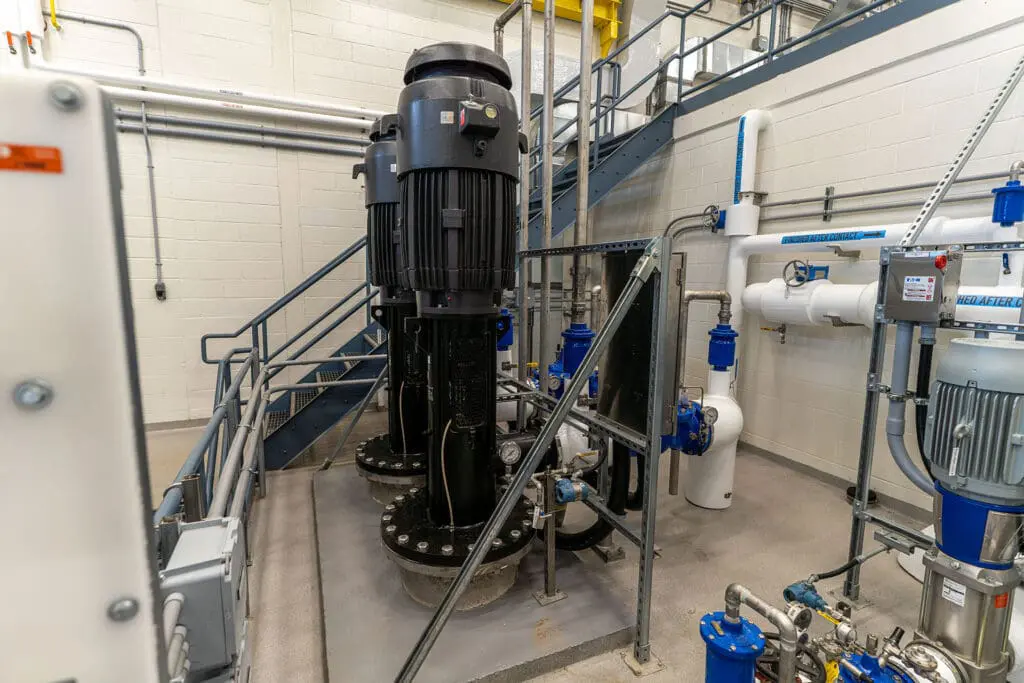
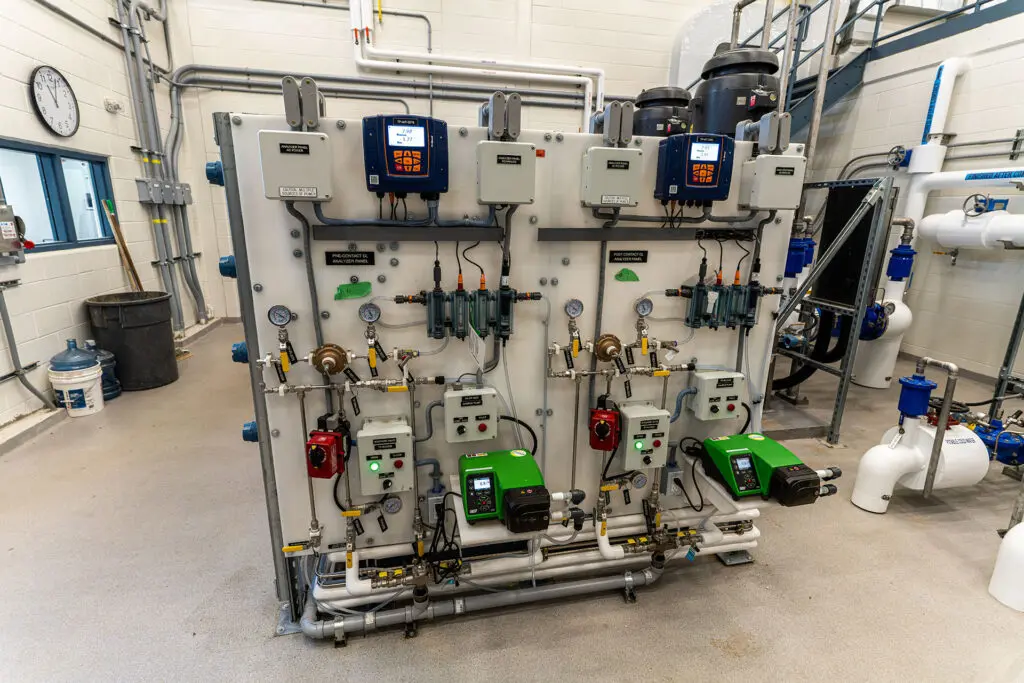
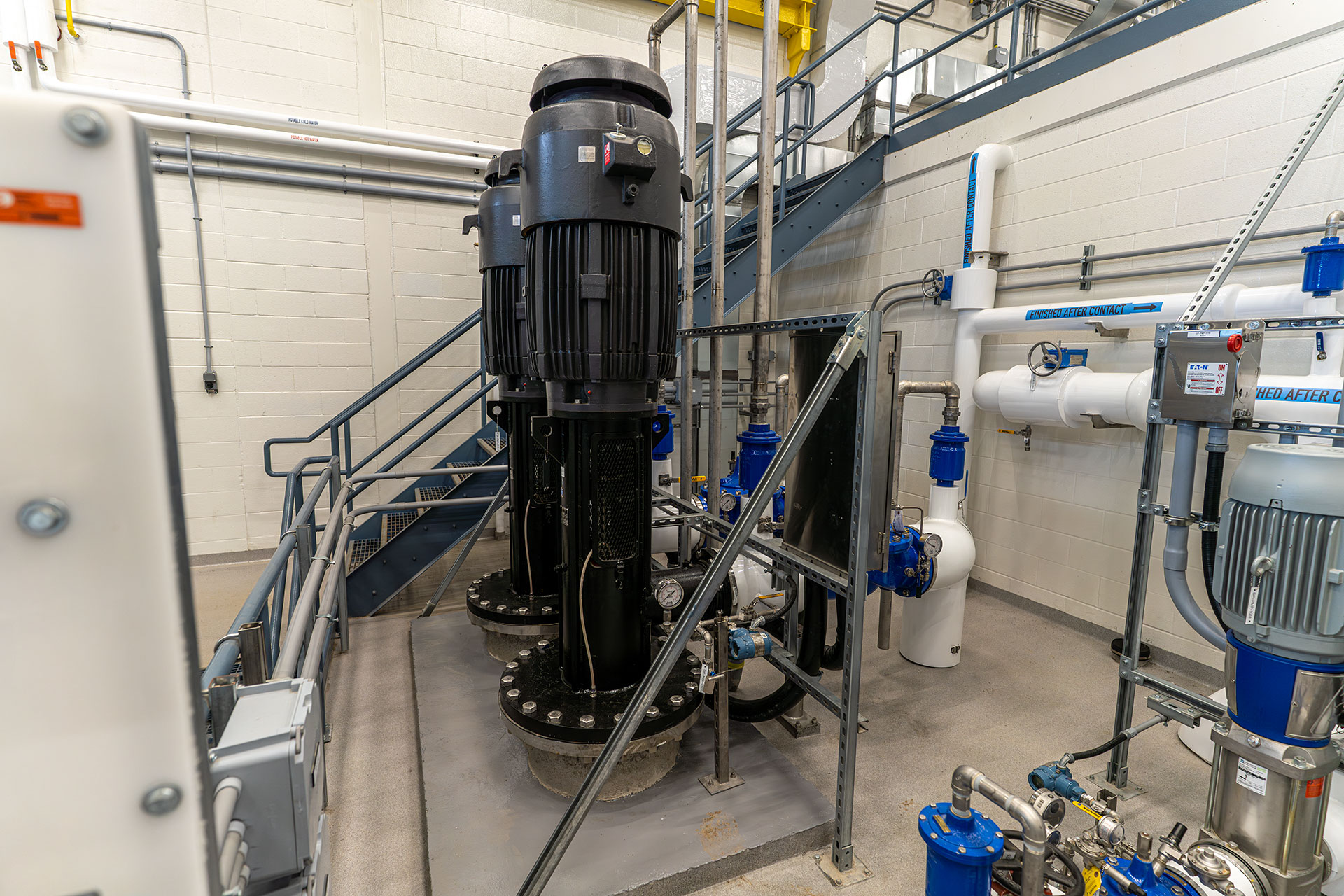
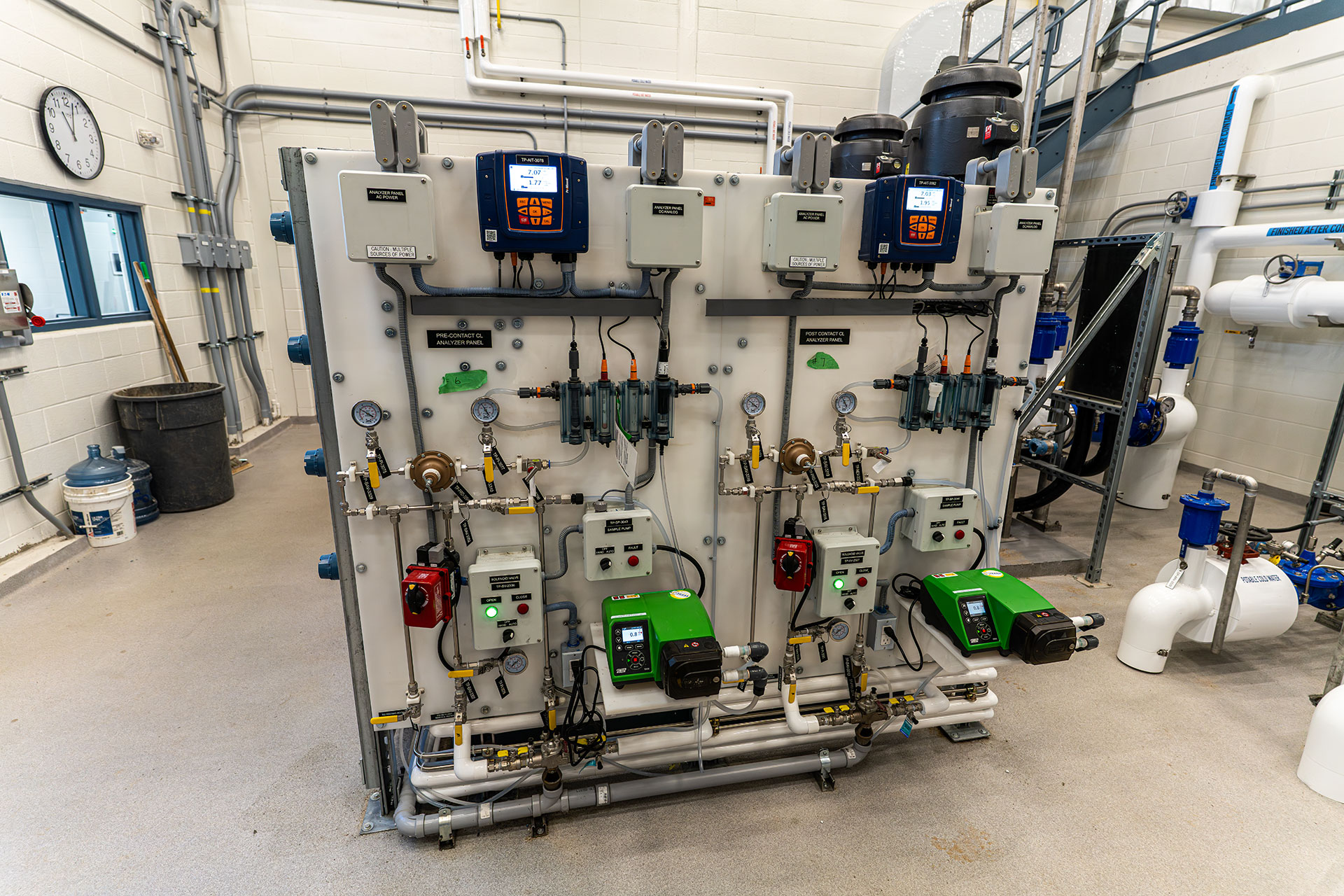
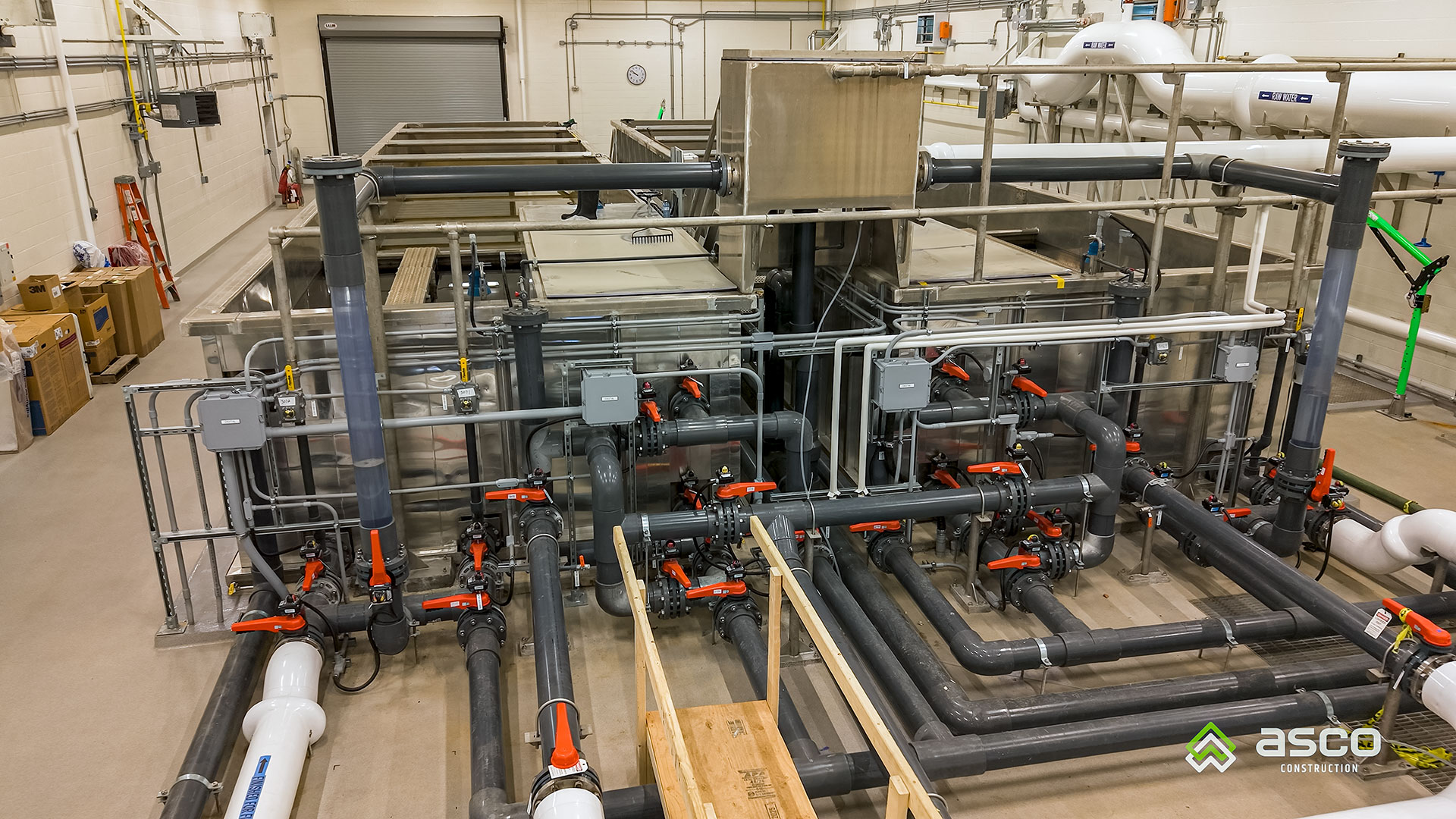
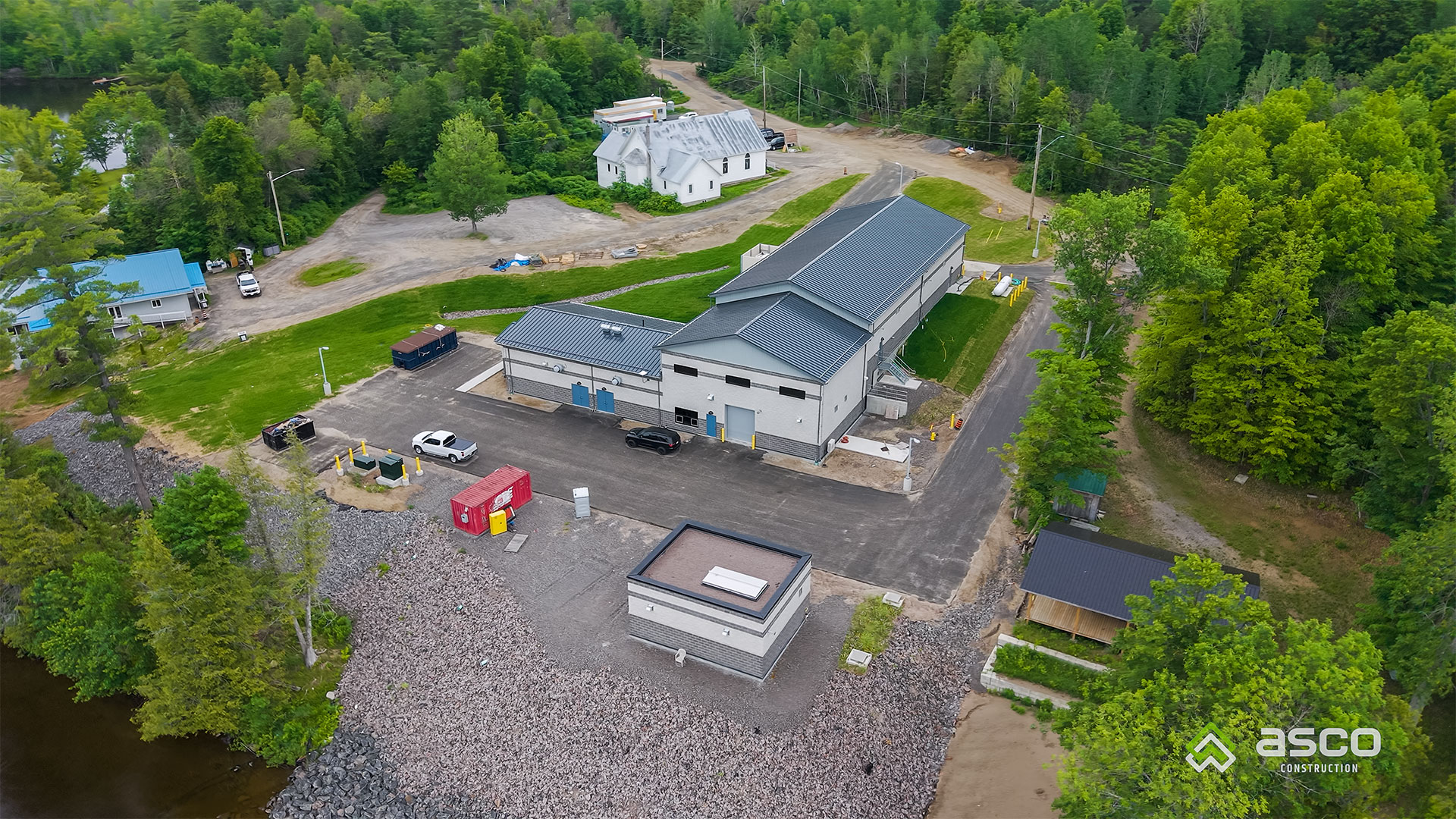
Construction of a 900 m² post-disaster water treatment facility designed to provide a reliable, long-term drinking water supply. The facility includes an inground concrete reservoir, automated chemical feed systems, backup diesel power generation, and advanced HVAC controls.
Designed for a treatment flow rate of 9.5 L/s and daily production capacity of 820.8 m³, the plant incorporates multiple treatment barriers to support water quality and system reliability.
Raw Water Intake and Treatment
Installation of a 400 mm HDPE raw water intake pipeline, supported by helical piers and ballast systems, and a dedicated raw water pumping station.
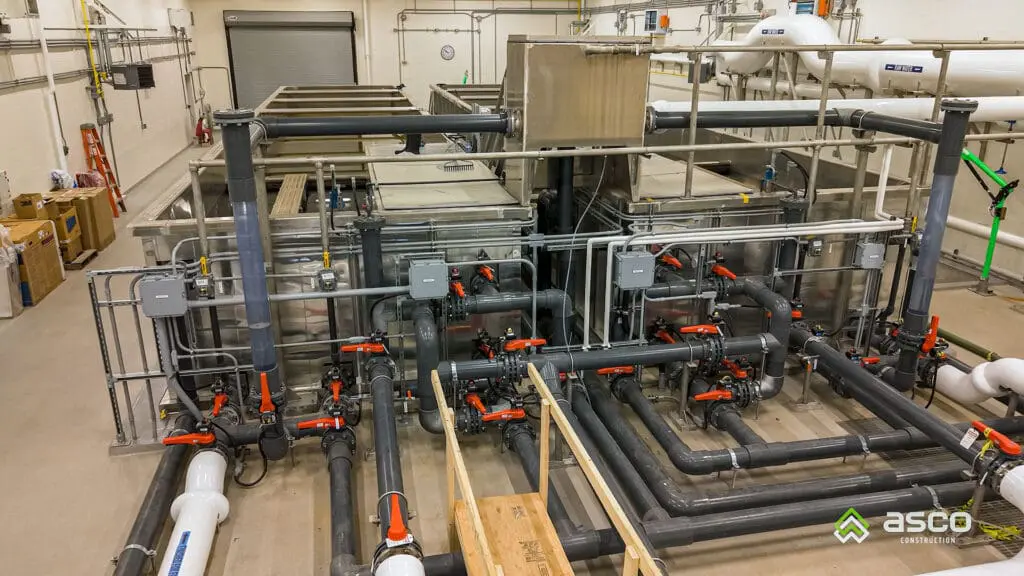
The treatment process combines pre-ozonation, slow sand filtration, granular activated carbon, ultraviolet disinfection, and chlorination. Coordinating these interconnected processes required careful integration, commissioning, and testing to verify system performance.
Distribution Network and Residential Services
Installation of over 12 km of buried watermains throughout the community, alongside valves, 101 hydrant assemblies, individual home pressure-reducing valve (PRV) assemblies with expansion tanks, and smart water meters. The work also included decommissioning existing wells and cisterns and reinstating affected road surfaces.
Site Works and Supporting Infrastructure
Additional work included site servicing, road and asphalt works, utility coordination, and supporting infrastructure required to bring the new water supply system into operation.
Community Participation and Training
A local content framework valued at more than $1.5 million supported community employment, local purchasing, and on-site training for First Nation water treatment operators. These opportunities help build local knowledge and capacity for the ongoing operation and maintenance of the system.
Coordinating Complex Infrastructure
Delivering a fully integrated water supply system required close coordination across civil, mechanical, and electrical disciplines, along with precise sequencing of installation, testing, and commissioning activities.
The team also addressed site-specific technical challenges as they arose, adapting construction approaches and coordinating engineering solutions while maintaining focus on quality, safety, and schedule.
The completed system provides essential drinking water infrastructure designed to support the Algonquins of Pikwàkanagàn First Nation for years to come.